|
|
 |
Rodent ulcer or basal cell epithelioma
|
 |
|
- Basal Cell Carcinoma
is a form of skin cancer that occurs due to sun exposure. Basal Cell Carcinoma
occurs many years after exposure. Metastatic disease rarely occurs (does not spread to distant organs). This type of cancer can cause disfigurement to the skin and nearby structures. If left untreated for long periods, it could potentially even burrow into structures as deep as the brain.
|
 |
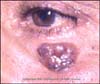
- Possible appearance
- Scab or skin erosion that does not heal
- Brown-gray (may be reddish) nodules on the scalp, face, ear, neck, back, and chest
- "Pearly" appearance
- Scarlike appearance
- Visible tiny blood vessels (telangiectatic vessels) located in the lesion or surrounding area
- Area affected grows slowly
|
 |
- Sun exposure
- Exposure to inorganic arsenic
- Risk factors include chronic sun exposure, light-skinned complexion (especially those with blue or green eyes and blond hair), and radiation exposure (may play role). Males are at higher risk, but women with this condition are also at risk.
|
 |
- Depends on the location and extent of invasion by the cancer
- Scraping may be done for superficial lesions.
- Surgical removal is best for single lesions, regardless of size.
- Cryosurgery (freezing), cauterization (burning), and Moh's surgery (microsurgery for recurrent or aggressive tumors) are techniques that may be used by an experienced surgeon.
- Radiation treatment (only if surgery is too difficult or there are recurrent lesions)
|
 |
- Basal Cell Carcinoma occurs from sun exposure years earlier (for example, repeated Burns or tanning).
Therefore, the best prevention is to avoid excess sun
exposure and use sunscreens. It is especially important in
children. Use at least an SPF 15 sunscreen before
going into sunlight (even in winter) and repeat as
necessary. Long-legged pants, hats, and long-sleeved
shirts are protective.
|
| | |
If you want your friend to read or know about this article, Click here
 |
|
|