|
|
 |
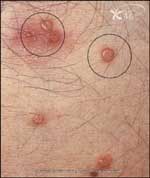
Abnormal |
| |
-
Molluscum
contagiosum is the name given to a group of small (2-6mm)
pinkish (can be flesh-colored, white, clear, or yellow) skin
growths that are spread by direct contact
(person-to-person).
- They are not dangerous, and often disappear on their own without treatment.
|
 |
- Mostly none
- Can have a rash around the lesions (growths of molluscum)
- There may be itching or tenderness.
|
 |
- Pox virus -- DNA virus that spreads via skin contact, person-to-person.
- The lesions can also spread to other sites of the body.
|
 |
- Children often have lesions on the trunk, legs, or arms.
- Adults have lesions on the inner thighs, groin, penis, vagina, or lower abdomen.
- Rarely, lesions can be seen in the mouth (lips, tongue, palate) or the eye (lids and conjunctiva).
- A scraping of the lesion (biopsy) is examined under the microscope, presenting viral colonies called intracytoplasmic inclusion bodies.
|
 |
- Skin contact -- via children in playgrounds, sexually active adults, and athletes, such as wrestlers.
- Patients of infected dentists or surgeons with hand lesions.
- Diseases that cause skin damage such as Psoriasis and Eczema increase the risk of molluscum.
- Sharing towels, gym equipment, or the soap of individuals with molluscum
|
 |
- Daily creams such as Tretinoin and Cantharidin work well.
- Stronger medications like oral Griseofulvin also work well.
- Lesions can also be frozen using liquid nitrogen.
|
 |
-
Avoid
scratching. Keep your towels and bath products separate from others until lesions are treated. Avoid sexual or close (skin to skin) contact with others. Molluscum Contagiosum is easily treated, so contact your physician.
|
| | |
If you want your friend to read or know about this article, Click here
 |
|
|