|
|
 |
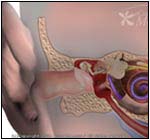
Normal |

Abnormal |
| |
- This condition is an infection of the external ear canal that often occurs during the summer months. The ear has two canals, the external and internal ear canal. A drum like structure called the tympanic membrane separates the two canals. The skin covering the canal normally protects it against foreign invaders such as bacteria.
|
 |
- Pain around the ear
- Itching
- Plugged ear
- Movement of the ear is painful
- Discharge of yellowish-greenish thick liquid from the affected ear
- Redness and tenderness around the ear and the surrounding tissue
- Wisdom teeth may be painful
- With the spread of infection to the surrounding bone, brain and the middle ear, a severe infection called Malignant Otitis Externa (MOE) can occur and contain the following:
- Fever if the infection is severe
- Neurological symptoms (i.e., confusion, headaches, balance problems, weakness or paralysis on one side) that spread to the inside of the brain and skull.
|
 |
- Bacteria such as Pseudomonas Aeruginosa (normally lives in the external canal), Staphylococcus Aureus, and Enterobacter species are common causes
- Trauma or injury to the ear canal
- Fungi such as yeast, aspergillus, and penicillin, can also cause OE.
- Pseudomonas and other bacterial OE can last for more than a few weeks, and become a chronic infection.
- Skin conditions such as Eczema, Seborrhea, Neurodermatitis, and allergic reactions to medications and other elements can irritate the external canal, which can then become infected.
|
 |
- Physical exam of the ear and a general exam must be done. The ear and surrounding area is observed and palpated. The physician will need to look inside the ear using an otoscope.
- Cultures or samples of the discharge must be sent to laboratory for analysis
- A blood analysis is done if the patient is very sick (i.e., elderly, diabetic) or has other severe illnesses.
- Other tests such as CAT SCAN or other X-Rays may need to be done if
the physician suspects MOE and the spread of infection to
the skull and the brain.
|
 |
- Swimmers
- Hot and humid air
- Elderly with diabetes
- Immunocompromised individuals (i.e., people whose natural body defenses are weak such as patients with AIDS, cancer, poorly controlled diabetics, those with liver or kidney failure, patients on Chemo- therapy or other drugs, or addicts)
- Hearing AIDS or headphones
- Skin diseases
|
 |
- In the case of a mild infection, the patient will receive painkillers such as Tylenol (2 tablets extra strength every six hours as needed), Antibiotic drops such as Cortisporin (3-4 drops every eight hours for one week to 10 days, or until the laboratory results become available.)
- In cases where there is potential for worsening of the infection, antibiotics by mouth are given for up to 14 days with a follow up visit.
- Topical anti fungal drops can also be used for fungal OE.
- Eczema and other skin conditions may need drops such as Aluminum acetate, steroid cream, or lotions and antibiotics.
- If there is a fever and the patient appears very sick, he or she is admitted to the hospital for Intravenous antibiotics and further work, and possible surgical cleaning or drainage of the ear and effected areas.
- Intravenous (via the blood) treatment may be necessary for 4-6 weeks if there has been a severe case of MOE or if the patient is Immunocompromised.
- Tylenol or aspirin can help with pain and fever.
|
 |
-
If you have ear pain or discharge, call your doctor as soon as you can. If you are very sick or have a fever, seek medical attention immediately, especially if you are an elderly person or have some other underlying diseases such as diabetes.
|
 |
- Ruptured tympanic membrane
- Middle ear canal infection
- Allergic reactions
|
| | |
If you want your friend to read or know about this article, Click here
 |
|
|