|
|
 |
PDA
|
 |
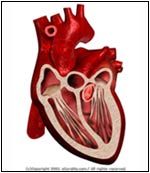
Normal |
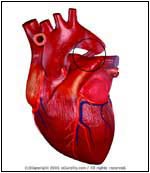
Abnormal |
| |
- Before birth, all the fetus' requirements for oxygen are provided by the mother, via her blood through an opening (patent) between the major vessel that supplies blood to the lungs (pulmonary artery) and the major blood vessel that supplies the body (aorta), so that blood pumped by the fetus' heart bypasses the lungs and is shifted to the body.
- This fetal artery is known as the ductus arteriosus or arterial duct.
- After the baby is born this patent (between the pulmonary artery and the aorta) slowly closes so that the baby's lungs can take over the job of providing oxygen for the body.
- The majority of newborns in whom the ductus does not close are asymptomatic, but in those in whom the ductus is large, more blood than needed travels through the pulmonary artery to the tiny lungs, causing breathing difficulties. If this condition continues, the extra pressure placed on the heart to pump the excess blood will eventually lead to Heart Failure (usually within 3 months).
|
 |
- Mainly asymptomatic with small ductus
- With a moderate opening, there may be shortness of breath, rapid shallow breathing (tachypnea), cough, hoarse cry, and recurrent Lung Infections.
- In large PDA there is gradual development of Heart Failure accompanied by the Failure to Thrive, bluish skin and lip color due to lack of oxygen (cyanosis), and poor appetite and failure to gain weight.
|
 |
- The examining doctor may notice the symptoms mentioned.
- The doctor may hear an abnormal murmuring sound of blood traveling through the ductus that is not present in normal babies (ductus closed).
- Chest X-Rays may show an enlarged heart and the presence of fluids in the lungs.
- Contrast echocardiography, Doppler echocardiography, and MRI are tests that can show the PDA, the structure of the heart, and its function.
|
 |
- Prematurity
- Birth asphyxia caused by a lack of oxygen delivered to the fetus or newborn
- Infection with certain viruses such as rubella
- Associated with other birth defects (congenital abnormalities) such as Ventricular Septal Defect and coarctation
- Seen in some genetic abnormalities such as trisomy 18 and 21
|
 |
- If there are no symptoms, the doctor may wait to see if ductus closes on its own.
- Drugs such as Indomethacin may induce closure of some PDA.
- Surgical correction may be needed in cases where medical therapy has failed to relieve the Heart Failure.
|
| | |
If you want your friend to read or know about this article, Click here
 |
|
|