|
|
 |
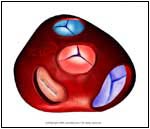
Normal |
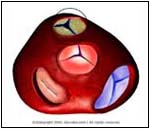
Abnormal |
| |
- During a normal heart's pumping action, blood is pumped from the right ventricle of the lower heart chamber, through the pulmonary valve into the pulmonary artery, which then carries the much-needed blood to the lungs.
- The pulmonary valve is surrounded by three leaflets and a ring (annulus) that attaches it to the heart muscle, and acts like a door allowing pumped blood to travel to the lungs, while closing to prevent blood from flowing back into the right ventricle.
- Stenosis (narrowing) of this valve places abnormal pressure on the ventricle when it is trying to pump blood across this narrowed valve into the pulmonary artery.
- The stenosis can be mild to moderate and asymptomatic, going unnoticed until childhood or early adulthood, causing such symptoms as fatigue, shortness of breath, or fainting with exertion.
- When the stenosis is severe, the extra pressure on the right ventricle will gradually damage its ability to pump blood, putting pressure on the rest of the body and causing such serious conditions as enlarged liver (hepatomegaly), chest pain, fluid build up in the legs (edema), fatigue, shortness of breath, and cyanosis (bluish-tinged skin).
- Most cases are due to birth (congenital) defects and may be associated with other congenital heart abnormalities. If the condition is severe in infants, it may cause Failure to Thrive, poor appetite, and inability to gain weight.
- In adults, any damage to heart valves (such as seen in Infectious Endocarditis and Rheumatic Fever) can also causes stenosis of the pulmonary valve.
- Treatment for mild cases may include observation and medication. For severe cases, surgery (such as balloon valvuloplasty) may be needed.
|
| | |
If you want your friend to read or know about this article, Click here
 |
|
|