|
|
 |
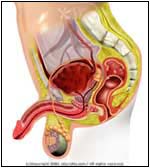
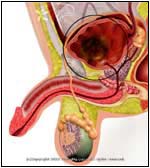
Transitional cell carcinoma of the bladder, bladder cancer, or urologic cancer
|
 |
- Blood in urine
- Urinary frequency
- Urinary urgency
|
 |
- In women, a pelvic exam may reveal a mass.
- An Advanced exam may reveal the following:
- Swollen legs
- Enlarged Liver
- Enlarged lymph glands above the clavicles
- Urinalysis may show blood and occasionally white blood cells
- Blood Urea nitrogen may be elevated
- Anemia may occur
- Urine cytology (urine checked for cancer cells)
- Intravenous urography (dye injected and X-Rays of bladder taken)
- Ultrasound
- CT Scan
- MRI
- Cystourethroscopy -- a scope is passed from the urethra into the bladder to look for cancer.
|
 |
- Cigarette smoking
- Industrial dye exposure -- textile industry, hairdressers, printers, and painters
- Industrial solvent exposure -- i.e., those who use solvents for metal, rubber, and leather
- Race may play a role -- Caucasians seem to develop TCC more than African-Americans.
- People over the age of 60 are at high risk.
- Those with a history of TCC are at high risk.
|
 |
- The decision as to which treatment to use depends on the size, degree, and spread of the bladder cancer.
- Intravesical chemotherapy is administered by using a catheter to inject the chemotherapy directly into the bladder.
- Surgical options depending on extent of spread:
- Limited resection of the tumors in the early stages is often done through a cystoscope, which is passed through the urethra (without cutting the abdomen, as in cystectomy), and is referred to as a transurethral resection (TUR).
- Partial bladder removal or partial cystectomy
- Removal of the total bladder is known as a radical cystectomy of the prostate, seminal vesicles, and other surrounding areas.
- Radiation therapy may be administered from outside the body, or via a radioactive material placed in the tumor.
- Immunotherapy, which uses the body's own immune system (natural defense), may be used for early stage tumors.
- Chemotherapy (intravenous) -- for
advanced disease
- Cisplatin
|
 | |
|
 |
- Be sure to ask your doctor, usually an oncologist (cancer specialist), to let you know of the latest research and ongoing clinical trials on new treatments, or call 1-800-4-CANCER.
|
| | |
If you want your friend to read or know about this article, Click here
 |
|
|