|
|
 |

Normal |
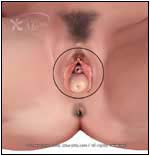
Abnormal |
|
|
-
Uterine
prolapse occurs when the uterus falls through the cervix
(the connection between the uterus and the vagina) into the
vagina. Symptoms and treatment depends on how much of the
uterus has fallen into the
vagina.
|
 |
- Symptoms depend on the extent of the prolapse. In some cases, only a small part of the uterus falls into the vagina. In other cases, the entire uterus falls into the vagina and can sometimes even be seen coming out of the vagina.
- Symptoms usually include fullness or discomfort in the vagina. Also, some women may notice the uterus coming out of the vagina.
- Occasionally, there may be problems
with urination or during intercourse.
|
 |
- Uterine prolapse is due to weakness of the muscles and other tissues in the pelvis that usually hold the uterus in place.
- The weakness is often related to
injuries that occur during childbirth. Also, as the woman
gets older, the tissues get even weaker and cannot support
the uterus. At some point, the tissues become weak enough
that the uterus falls through the cervix into the vagina.
|
 |
- A full pelvic examination by the doctor will usually be enough to make the diagnosis.
- If needed, additional tests such as an Ultrasound or CT scan
can be done, but this is usually not
needed.
|
 |
- Treatment depends on the extent of the prolapse, the age of the person, and the patient's interest in future pregnancies.
- A vaginal hysterectomy, in which the uterus is removed through the vagina, is the simplest solution. However, the woman can never become pregnant after this surgery.
- If the woman wants to become pregnant, then surgery to strengthen the cervix and the tissues of the pelvis is a possibility.
- In older women who no longer are interested in intercourse, the vagina can be partially closed off.
- If the person cannot have surgery
or does not want surgery, a pessary can be placed in the
vagina. This is a support placed in the vagina that helps
hold the uterus in place.
|
| | |
If you want your friend to read or know about this article, Click here
 |
|
|