|
|
 |

Normal |

Abnormal |
|
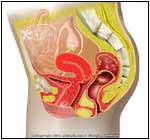
Normal |
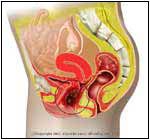
Abnormal |
|
|
- Cancer of the vagina, a rare kind of cancer in women, is a disease in which cancer (malignant) cells are found in the tissues of the vagina.
- There are two types of cancer of the vagina: squamous cell cancer (squamous carcinoma) found in older women; and adenocarcinoma, found in women under 30 years of age.
- Women whose mother's took DES (diethylstilbestrol) before 1970 are at increased risk of adenocarcinoma (clear cell type). Any bleeding or discharge when not menstruating, painful or default in urination, pain during intercourse, protruding mass through the vagina, pain in the lower abdomen or pelvic area, enlarged lymph nodes, or lumps in the inguinal area should be reported to your doctor for further evaluation.
- The doctor needs to do a pelvic exam, with direct visualization of the vaginal canal and cervix. A pap smear also may be done.
- If a growth or tumor is found, a biopsy is done and sent to the pathology laboratory for further microscopic examination. Other tests such as chest X-Ray, abdominal and pelvic CAT scan, and biopsy of lymph nodes may need to be done to see if the cancer has spread to other local and distant sites.
- The choice of treatment depends on the type and stage of the cancer (whether it is just in the vagina or has spread to other places) and the patient's age and state of health. Treatment may include surgery, radiation, and chemotherapy alone or in combination.
|
| | |
If you want your friend to read or know about this article, Click here
 |
|
|