|
|
 | |
Bladder
infection
|
 |
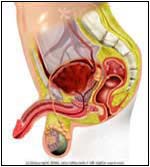
Normal |
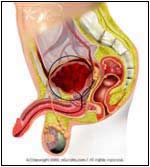
Abnormal |
|
|
- Cystitis is usually caused by
bacteria. It is an extremely common problem and most often
affects women. Men can also have Bladder Infections, but it
is much less common.
|
 |
- The most common symptoms are
frequent urination, burning or painful urination, and
urgency (having to go to the bathroom right away).
- Some notice blood in their urine,
while others have pain in the region of the bladder.
- Most do not have fever and usually
are not very sick.
|
 |
- Cystitis is usually due to a
bacterial infection of the urine. Occasionally, in
children it can be caused by a virus.
- The infection is more common in
women because a woman's anatomy is designed in such a way
that it makes it easier for bacteria to enter the bladder.
- Sexual intercourse, using
spermicidal creams, and using diaphragms all increase the
risk of developing Bladder Infection.
- People who have a catheter in
their bladder or who have to periodically catheterize
themselves have a higher risk of developing bladder
infection.
- People with Bladder Cancers or
abnormal connections between their bladder and intestines
also have a higher risk of developing Bladder Infection.
|
 |
- Often times, treatment may be based
on the symptoms alone, without additional tests.
- Urinalysis (in which
the urine is tested for the presence of an infection) is the
most common method of diagnosis.
- Blood and Urine cultures may
also be required.
- In women with frequent infections
(more than three a year), a full examination of the urinary
tract (usually by a specialist) needs to be done. Also, it
is sometimes recommended that all men who develop any type
of urinary infection, including Bladder Infections, need to
be seen by a specialist.
|
 |
- Antibiotics are needed to treat the
infection. There are a wide variety of antibiotics available
for the treatment of Bladder Infections. Talk to your doctor
to see which one is best for you.
- Some infections only require 3 days
of antibiotics. Other more serious infections require 7 to
10 days of antibiotic therapy.
- Women who have more than three
Bladder Infections
per year may need prophylactic therapy (i.e., they are given
antibiotics to prevent repeat infections).
- The most common antibiotics used
for prophylactic therapy are
Trimethoprim-sulfamethoxazole, Nitrofurantoin, and
Cephalexin.
- The antibiotics are taken once a
day or at the time of intercourse.
|
| | |
If you want your friend to read or know about this article, Click here
 |
|
|