|
|
 |
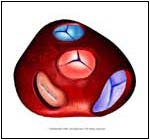
Normal |
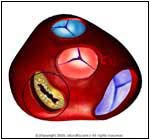
Abnormal |
| |
- The mitral valve, one of four heart valves separating the chambers (cavities) of the heart, has a set of flaps that open and close, allowing the blood to flow from the upper chamber (left atrium) to the lower chamber (left ventricle).
- This valve can be damaged or diseased. In Mitral Stenosis (MS), it cannot open completely (stenosis), forcing the blood to flow through a narrowed opening, and causing many problems for the pumping heart, such as Heart Failure, enlargement of the left atrium, and the back up of blood into the lungs.
|
 |
- Shortness of breath with activities such as climbing stairs
- Shortness of breath when lying prone (flat), requiring use of 2-4 pillows to sleep
- Suddenly waking up at night with shortness of breath
|
 |
-
History of
Rheumatic Fever and other medical problems
- On physical examination, one can hear the abnormal flow across the narrowed valve (murmur), as well as the sound of the stenotic valve opening.
- The sound of fluids in the lungs
- The pulse may indicate atrial fibrillation
- Chest X-Rays may show Fluid in the Lungs and an enlarged heart.
- EKG (Electrocardiogram), which reveals the electrical impulses of the heart, may show atrial fibrillation and an enlarged heart (atrium and ventricle).
- Echocardiograph uses sound waves to visualize the heart, valve, and the flow across.
- Cardiac catheterization is done by injecting a dye into the femoral vein (in the groin area), providing valuable information about the heart. This is done in the hospital by a heart specialist (cardiologist).
|
 |
- Prosthetic (artificial) valves
- Untreated Rheumatic Fever, common in poor countries with no access to proper antibiotics
|
 |
-
Symptomatic
treatments include:
- Diuretic medications such as Lasix given if there is fluid buildup in the body
- Digitalis and other medications can normalize the heart rate as in atrial fibrillation
- Blood thinners (anticoagulants) such as Warfarin are given to reduce blood clot formation.
- When symptoms are severe and medications do not help, surgical correction of the valve or its replacement may be necessary.
- Antibiotics are given before any surgical or dental procedures to prevent infection (prophylaxis) of the stenotic valve.
- Antibiotics are given long term to those with risk of Rheumatic Fever.
|
 |
-
Have your doctor examine you or refer you to a cardiologist. A good source of information is the American Heart Association 1-800 242-8721.
|
 |
- Left-sided Heart Failure
- Heart attack
- Mitral valve prolapse
- Left atrial tumors
- Tricuspid valve stenosis
- Swelling (excess fluids) of ankles, arms, and abdomen
- Fatigue, weight loss, and weakness
- Enlarged atrium:
- Hoarse voice
- Irregular heart rate (atrial fibrillation) leads to Palpitations (pounding or galloping)
- Blood clots can form in the atrium and travel (embolize) to other parts of the body and cause damage.
- One can cough up blood (hemoptysis)
|
| | |
If you want your friend to read or know about this article, Click here
 |
|
|